


The Saskatchewan Association of Rural Municipalities (SARM) is calling on the federal government to recognize Saskatchewan’s role in Canada’s clean growth economy, while ensuring the province maintains control over its natural resources and energy costs.
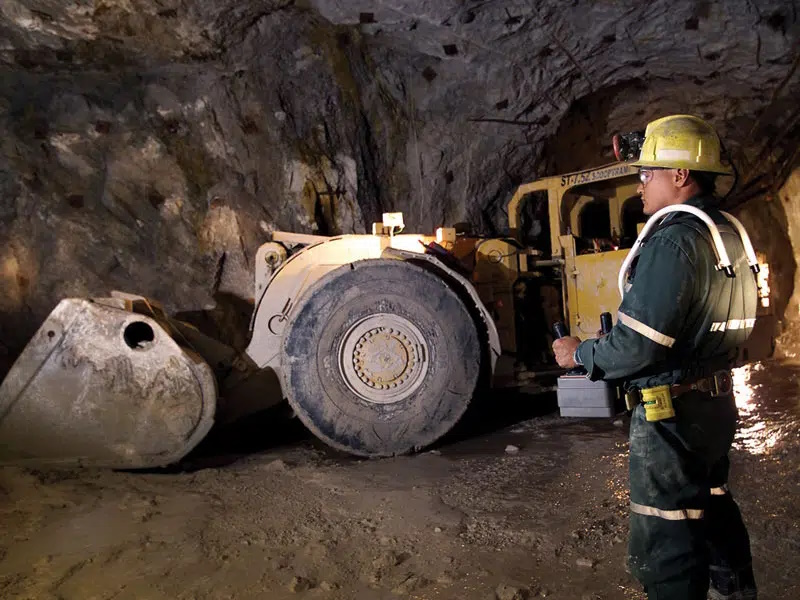
SARM president Bill Huber says Saskatchewan is uniquely positioned to contribute to clean energy development, particularly through its critical minerals sector.
“We’re asking for the federal government to appreciate Saskatchewan’s role here and how we can help with this clean energy growth, what they call Canada’s clean growth economy,” Huber said.
Critical minerals and natural resources
Huber said Saskatchewan is home to 27 of Canada’s 34 critical minerals, along with the world’s largest deposits of potash and high-grade uranium.
He added that the province is well-positioned to drive sustainable economic development, especially in rural regions.
“To sum it up, Saskatchewan is rich with natural resources,” he said.
Huber noted that agriculture remains the backbone of many rural municipalities. He said Saskatchewan has 44 per cent of the country’s arable land and some of the top agricultural producers in Canada.
“Our whole industry in this province is dependent on agriculture,” he said, adding that oil and gas, mining, and forestry are also key economic drivers.
Concerns over electrical costs
A major concern for SARM is the potential impact of federal clean electricity regulations. Huber said power costs could rise significantly under the current framework.
“Under the current clean electricity regulations, our electrical costs could rise. They could double in five to 10 years,” he said.
Huber warned that higher electricity costs could deter investment and reduce Saskatchewan's competitive edge.
The province’s $5.5 billion fertilizer industry depends heavily on electricity, as do manufacturing companies that rely on power to operate equipment and facilities.
“If those costs go up, we lose that competitive edge,” he said. “Some of these producers, rather than build here or expand their operations, might just move on to other places.”
Infrastructure and local advocacy
Huber said Saskatchewan needs federal support for infrastructure, including roads, bridges, highways, railways, and port access, to move products to global markets.
He emphasized that SARM represents all 296 rural municipalities in the province and lobbies on their behalf.
“Farming is the main industry for most of our members in our rural municipalities. Agriculture is huge,” Huber said.
He added that Saskatchewan farmers have already taken steps to address climate concerns, including adopting direct seeding and other technologies.
“We did it on our own, on our own farms, in our own districts, our municipalities and we have to be recognized for that and given some credit,” he said.
Huber said SARM wants to work collaboratively with Ottawa but is seeking greater control over natural resources and long-term energy costs.
“We need to work with the federal government, but we recognize that we need some control and working together is what we really need in cooperation,” he said.










 Fri, Feb 13, 7:30 AM


 Full-time, Permanent, Agriculture, Transport
 Featured